
This page is about the Beatles For Sale No. 2 EP, not the parent album or the earlier Beatles For Sale EP. Issued in the UK on 4 June 1965, it was the Beatles’ ninth official British EP and a clear sign that EMI still believed there was strong commercial life left in the Beatles For Sale material half a year after the album itself had appeared.
That makes it more interesting than a routine follow-up. The first Beatles For Sale EP had leaned towards stronger chart bait, including “Eight Days A Week“. This second one took a different route. It pulled together a gentler, more reflective, and more harmony-led selection from the album, which helps explain both its musical identity and its weaker chart peak. In other words, this was not just more of the same. It was a second pass through the album with a noticeably different mood.
Beatles For Sale No. 2 EP: Key Facts
- Release Date: 4 June 1965
- Format: 7-inch vinyl EP, 45 RPM, mono only
- Catalogue Number: Parlophone GEP 8938
- Tracks: Four
- Source Album: Four tracks from Beatles For Sale
- Recording Period: Sessions from August to October 1964 at EMI Studios, London
- Running Time: 8:30
- Producer: George Martin
- Sleeve Photo: Robert Freeman
- UK Chart Performance: Number 5 on the EP chart; 24 weeks on chart
Why The Beatles For Sale No. 2 EP Mattered
The obvious criticism is simple enough: every track had already appeared on the album. However, that misses the point of British EPs in 1965. They were still a viable way to sell high-demand catalogue in a cheaper format, and they also let record companies reshape an album into smaller themed packages. This EP matters because it shows EMI doing exactly that with growing confidence.
It also proves that Beatles For Sale was strong enough to sustain more than one short-format spin-off. The first EP drew together some of the harder-hitting and more obviously commercial songs. Beatles For Sale No. 2 went the other way. It favoured melancholy, close harmony, Buddy Holly influence, and country-inflected songwriting. That gives the record a coherence many Beatles EPs never quite achieved.
Track Listing
Side A
Side B
Why This EP Was Different From The First Beatles For Sale EP
This is the key comparison. The earlier Beatles For Sale EP had “No Reply“, “I’m A Loser“, “Rock And Roll Music“, and “Eight Days A Week” – a set with harder impact and a clearer commercial hook. Beatles For Sale No. 2 is subtler. It replaces that punch with wistfulness, close-harmony sadness, Buddy Holly homage, and one of Lennon’s best country-tinged songs.
That does not make it weaker artistically. In some ways it makes it more revealing. This second EP gets closer to the inward, slightly weary mood that gives the parent album its character. It also helps explain the charts: the first EP looked like an obvious hit package, while this one felt more like a carefully selected second shelf for people already deep enough into the album to want more.
What The EP Actually Offered
The sequence is stronger than the chart peak suggests. “I’ll Follow The Sun” opens with one of McCartney’s gentlest early songs, and one with roots stretching back to his teenage years. “Baby’s In Black” then deepens the mood with its unusual country waltz feel and shared Lennon-McCartney lead vocal. On side two, “Words Of Love” pays open tribute to Buddy Holly’s vocal style, while “I Don’t Want To Spoil The Party” closes with one of Lennon’s most convincing blends of pop and country.
That gives the EP a real identity. It is less about showy Beatles excitement and more about craft, harmony, and mood. In miniature, it highlights one of the best things about Beatles For Sale: beneath the covers and the exhaustion, the album contained some of the Beatles’ most emotionally detailed writing of 1964.
Performers And Recording Details
- Paul McCartney: lead vocal on “I’ll Follow The Sun”, shared lead on “Baby’s In Black”, bass guitar, acoustic lead guitar
- John Lennon: lead vocal on “I Don’t Want To Spoil The Party”, shared lead on “Baby’s In Black”, rhythm guitar
- George Harrison: electric lead guitar, twelve-string guitar, backing vocals
- Ringo Starr: drums, percussion, packing case on “Baby’s In Black”
- George Martin: piano where applicable on the parent sessions
The recording spread matters too. “Baby’s In Black” was one of the first songs taped for the album sessions in August 1964. “I Don’t Want To Spoil The Party” followed in late September. “I’ll Follow The Sun” and “Words Of Love” were recorded in October, which means the EP quietly pulls together material from across the whole Beatles For Sale period rather than one narrow burst of activity.
There is also a useful roots angle here. The Beatles had played “Words Of Love” in their live sets from the late 1950s into 1962 and had already recorded it for BBC radio in 1963, long before cutting the album version. That makes its appearance on this EP more than a random cover choice. It is part of the band’s deeper pre-fame repertoire coming back into view.
Beatles For Sale No. 2 EP: Sleeve And Packaging
The sleeve does not just recycle the album photograph. It tightens it. Robert Freeman’s Hyde Park portrait moves in closer, with Paul and Ringo pushed to the front and George and John slightly receding behind them, which makes the image feel more intimate and less panoramic than the parent LP cover. The colour palette stays muted and wintry, but the No. 2 title gives the design a deliberate sequel feel rather than the look of a leftover offcut.
That visual choice suits the music. This EP is softer, sadder, and more reflective than the first Beatles For Sale EP, and the close-up Freeman shot reinforces exactly that. The faces look tired, guarded, and almost private. On a short-format release, the effect is stronger still: the record feels less like a sampler and more like a concentrated mood piece from late-1964 Beatles.
Collecting And Pressing Details
Collectors watch the pressing details closely here. First issues came in mono only with matrix numbers 7TCE 874-1 and 7TCE 875-2, plus the embossed KT tax code on both sides. The rear sleeve is notably sparse, because EMI did not include the kind of printed notes found on some earlier Beatles EPs.
That makes this sleeve slightly unusual among mid-period Beatles EPs, because the new Robert Freeman colour portrait is the main selling point while the rear cover offers almost no supporting material at all.
Later copies changed several details. Original labels already used “The Gramophone Co. Ltd.” wording around the edge and carried the old resale-price line across the push-out centre.
Later re-pressings used smaller, more modern type, dropped the resale-price wording in the early 1970s, and eventually added a boxed EMI logo. Sleeve quality also declined, with newer covers tending to look thinner and less carefully finished. That kind of detail matters because Beatles EPs were proper catalogue items, and collectors can tell the difference very quickly once they know what to watch for.
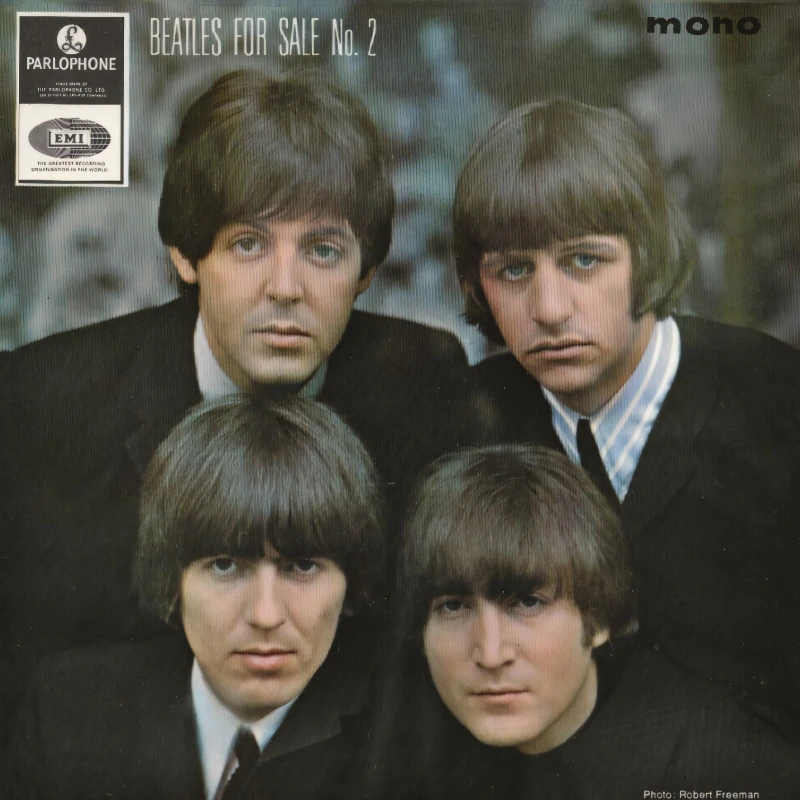
Fair Dealing Disclaimer: Low-resolution image used for identification, criticism, review, and historical commentary relating to the Beatles For Sale No. 2 EP sleeve and packaging. All rights remain with the copyright holder.
Chart Success
Commercially, this was much less successful than its sibling. It entered the UK EP chart on 12 June 1965, reached number 5, and remained there for 24 weeks. That is still a respectable run by any normal standard, but beside the first Beatles For Sale EP it looks modest.
That weaker peak probably says something obvious but important. Buyers responded more strongly to the first EP’s punchier selection, while this follow-up offered a subtler set of songs with less immediate chart pull. Even so, 24 weeks on the EP chart was no failure. It showed that the album still had enough strength to support a second short-format release half a year after it first appeared.
Where To Find The Songs
- All four tracks appear on Beatles For Sale.
- “I’ll Follow The Sun” and “Baby’s In Black” appeared in the US on Beatles ’65.
- “I Don’t Want To Spoil The Party” later appeared in the US as the B-side of “Eight Days A Week”.
Why This EP Still Deserves Its Own Page
Beatles For Sale No. 2 deserves its own page because it reveals a different side of both the album and the Beatles’ EP strategy. It proves that EMI was not just reusing material blindly. The label had already issued one strong four-track package from the album, then came back with a second one that leaned into a completely different mood.
Seen that way, this is more than a weaker sequel. It is a compact document of how carefully Beatles material could be reshaped for the market in 1965: first the harder, more obviously commercial songs, then the gentler, more introspective, more harmony-based side of the same album. That is a more interesting story than most short summaries of the record ever tell.
Have your own thoughts on the EP? Join the discussion in the Beatles Fan Club Forum.
Sources And References
- The Beatles – I’ll Follow The Sun release details.
- The Beatles – I Don’t Want To Spoil The Party details.
- The Beatles – Words Of Love history and release details.
- Graham Calkin’s Beatles Pages – EP chart, sleeve, and pressing details.
