
Trident Studios mattered to the Beatles because it gave them something Abbey Road could not offer at a crucial moment in 1968: eight-track recording. In a period when the group wanted more flexibility in the studio, Trident’s technical advantage made it one of the few London studios that could genuinely offer something new.
That is why this place deserves its own page on BeatlesFan.Club. Trident was not the Beatles’ main home base, but it played an important role in their later career. It hosted the master recording of Hey Jude, part of the White Album sessions, and the first proper studio work on I Want You (She’s So Heavy).
Key Facts
- Founded: 1967
- Founders: Norman Sheffield and Barry Sheffield
- Location: 17 St Anne’s Court, Soho, London
- Why It Mattered: It offered eight-track recording before Abbey Road caught up
- Main Beatles Period There: 1968 to 1969
- Most Famous Beatles Recording There: “Hey Jude”
- Other Key Beatles Songs: “Dear Prudence“, “Honey Pie“, “Martha My Dear“, “Savoy Truffle“, and “I Want You (She’s So Heavy)”
Why The Beatles Used Trident Studios
By mid-1968, the Beatles had reached a point where four-track recording felt restrictive. Abbey Road was still their main studio, but Trident offered an operational eight-track machine, which immediately made it attractive. That was the practical reason for the move, not some broad desire to abandon EMI altogether.
This matters because it places Trident in the right context. The studio was important not because the Beatles suddenly preferred Soho to St John’s Wood, but because Trident briefly gave them a technical edge they could not yet get at Abbey Road. Once EMI finally put its own eight-track machine into use in September 1968, Trident remained useful, but it was no longer uniquely necessary.
“Hey Jude” And The Move To Eight-Track
The best-known Beatles recording made at Trident was Hey Jude. After rehearsals at Abbey Road, the group moved to Trident on 31 July 1968 to record the master take properly on eight-track. That decision alone explains why Trident occupies such a big place in Beatles studio history.
It was not just a technical footnote either. “Hey Jude” became one of the Beatles’ most famous singles, and Trident was the place where its master recording took shape. In other words, the studio is tied directly to one of the defining records of the band’s later years.
The White Album Sessions At Trident
The Beatles returned to Trident several times during the White Album sessions. Dear Prudence was recorded there across 28 to 30 August 1968, at a time when Ringo Starr had temporarily left the band. That detail makes the Trident sessions even more revealing, because they capture the Beatles working through one of the White Album’s most tense periods.
The studio also hosted work on Honey Pie, Martha My Dear, and Savoy Truffle in early October 1968. These songs are very different from one another, which is part of the point. Trident was not used for one narrow type of Beatles recording. It handled a huge singalong single, a delicate John Lennon track, Paul McCartney‘s music-hall pastiche, and George Harrison‘s brass-heavy confection.
That range is one of the best arguments for keeping this page. Trident was not just where the Beatles cut one famous single. It became a short but important extension of their White Album world.
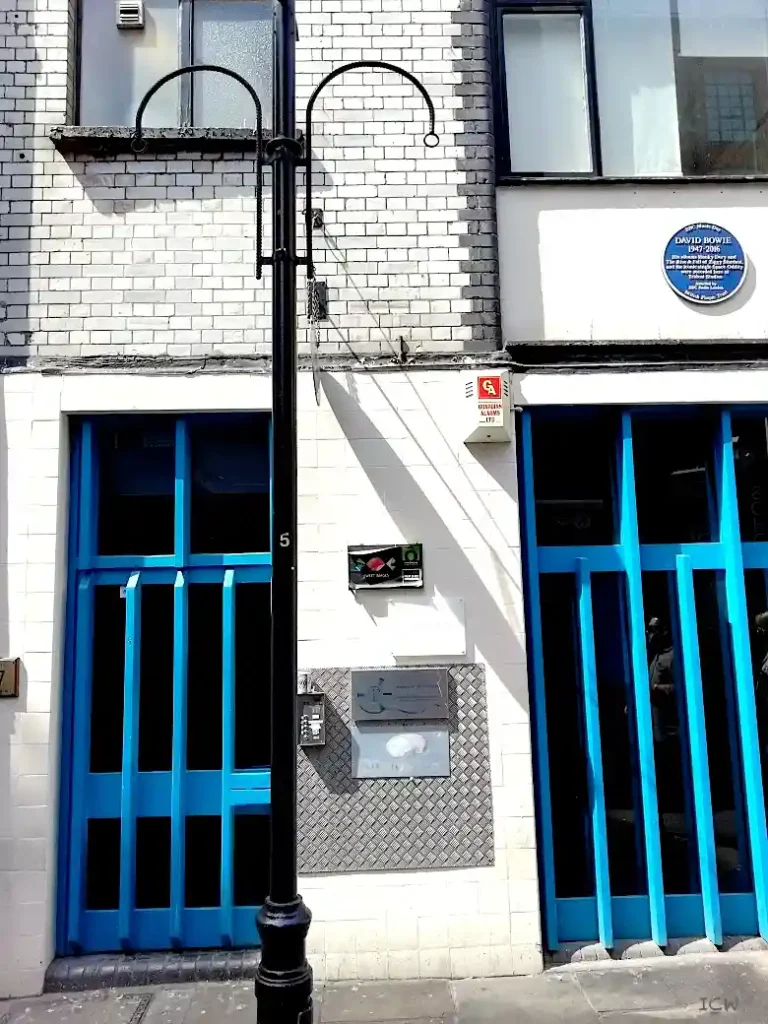
Image credit: Photo by Picachord, via Wikimedia Commons, licensed under Creative Commons Attribution-ShareAlike 4.0 International (CC BY-SA 4.0). Original image dated 27 June 2018. Cropped, resized, and converted to WebP from the original.
“Dear Prudence” And A White Album Turning Point
If one White Album track best shows why Trident mattered, it may be “Dear Prudence”. The song was built there in Ringo’s absence, with the remaining Beatles layering the parts carefully on eight-track. That gave them more room to shape the performance piece by piece than Abbey Road’s four-track setup would easily allow.
There is also a more human reason this session matters. “Dear Prudence” belongs to the same unsettled period that produced arguments, walkouts, and growing strain inside the group. Trident was therefore not just a technical escape hatch. It was also part of the setting for one of the Beatles’ most complicated album projects.
The Return For “I Want You (She’s So Heavy)”
The Beatles went back to Trident on 22 February 1969 to begin proper studio work on I Want You (She’s So Heavy). That session matters because it linked Trident not only to the White Album era but also to the beginning of the Abbey Road recordings.
That first Trident session also matters because it was not just a vague early sketch. The Beatles recorded the backing track there on 22 February 1969, and Billy Preston was present on Hammond organ. That gives Trident a direct connection not only to the start of the song, but to the broader late-Beatles circle forming around the group in 1969.
This gives the studio a wider Beatles importance than some pages suggest. Trident was not just a late-1968 detour. It also played a part in the next phase of the band’s studio life, right as they were moving beyond Get Back and towards Abbey Road.
Trident And The Wider Apple World
Another reason Trident matters is that it was part of the wider Apple orbit. Beatles-related sessions for artists such as Mary Hopkin, Jackie Lomax, Billy Preston, James Taylor, and the Iveys moved through the same world. That means Trident was not just a Beatles stop-off. It was part of the sound and business environment surrounding Apple in 1968 and 1969.
That broader context improves the page because it shows that Trident belonged to a network, not an isolated anecdote. When the Beatles worked there, they were entering a studio that was already becoming part of their expanding post-EMI world.
Other Major Artists At Trident Studios
Although this page is centred on the Beatles, Trident’s wider reputation also helps explain why the studio mattered. It became associated with major recordings by artists including David Bowie, Elton John, Queen, and others. That larger reputation did not create the Beatles connection, but it does confirm that Trident was one of the most important independent London studios of its era.
Why Trident Studios Still Matters In Beatles History
Trident Studios matters because it solved a problem at exactly the right moment. The Beatles needed more tracks, more flexibility, and more room to build increasingly complex records. Trident provided that before Abbey Road could.
That is why this page should focus on substance rather than nostalgia. Trident was not important because it was fashionable or because other stars used it. It was important because some major late Beatles recordings would have taken a different path without it.
Trident Studios In Summary
Trident Studios was one of the key outside studios in the Beatles’ later career. It gave them eight-track recording when they wanted to move beyond Abbey Road’s four-track limits, and it became the site of “Hey Jude”, part of the White Album sessions, and the opening work on “I Want You (She’s So Heavy)”.
That is the real reason the page deserves to exist. Trident was not the Beatles’ main home, but it was an important auxiliary studio at a decisive point in their evolution.
Sources And References
- Trident Audio Developments – Studio history.
- The Beatles – “Hey Jude” song page.
- The Paul McCartney Project – Apple and Trident context.
- The Paul McCartney Project – “Hey Jude” at Trident.
