
Rubber Soul is The Beatles’ sixth UK studio album, released at the point where the band stopped behaving like a touring pop act who happened to make records and started thinking like studio artists. The songwriting gets sharper and more personal, the arrangements get bolder, and the production choices start doing creative work rather than simply capturing a performance.
Key Facts
- Release date (UK): 3 December 1965
- Recorded: 12 October–11 November 1965 (with “Wait” recorded on 17 June 1965)
- Record label: Parlophone
- Studio: EMI Studios, London (now Abbey Road Studios)
- Album duration: 34:55
- Genre: folk rock, rock, pop
- Producer: George Martin
- Engineer: Norman Smith
Performers And Instruments
- John Lennon: vocals, electric and acoustic guitars, tambourine, Vox Continental organ
- Paul McCartney: vocals, bass guitar, electric and acoustic guitars, piano
- George Harrison: vocals, electric and acoustic guitars, sitar
- Ringo Starr: vocals, drums, percussion
- George Martin: producer; played the piano solo on “In My Life”, recorded at half-speed to create the harpsichord-like effect
- Other performer: Mal Evans: credited on the sleeve for Hammond organ on “You Won’t See Me”
Rubber Soul Album: The Songs & Lead Vocals
One easy-to-miss detail: “What Goes On” carries the unique writing credit Lennon-McCartney-Starkey, the only such credit on the album.
Side One
- Drive My Car – McCartney with Lennon
- Norwegian Wood (This Bird Has Flown) – Lennon
- You Won’t See Me – McCartney
- Nowhere Man – Lennon
- Think For Yourself – Harrison
- The Word – Lennon
- Michelle – McCartney
Side Two
- What Goes On – Starr
- Girl – Lennon
- I’m Looking Through You – McCartney
- In My Life – Lennon
- Wait – Lennon and McCartney
- If I Needed Someone – Harrison
- Run For Your Life – Lennon
LP Cover
The cover photo was taken by Robert Freeman.
The stretched, elongated look was not some elaborate darkroom trick: the effect came about when the image was being projected for the band and the projection surface shifted, warping the faces and making the title “Rubber Soul” suddenly feel visually real.
The hand-drawn, rubbery lettering was designed by Charles Front, and it ended up influencing a lot of later psychedelic and poster-style typography. The style became a beacon in psychedelic designs, and it also fed into the wider “flower power” poster look.
It was also the first Beatles album sleeve to leave the band’s name off the front, which says a lot about how recognisable they had become by late 1965.
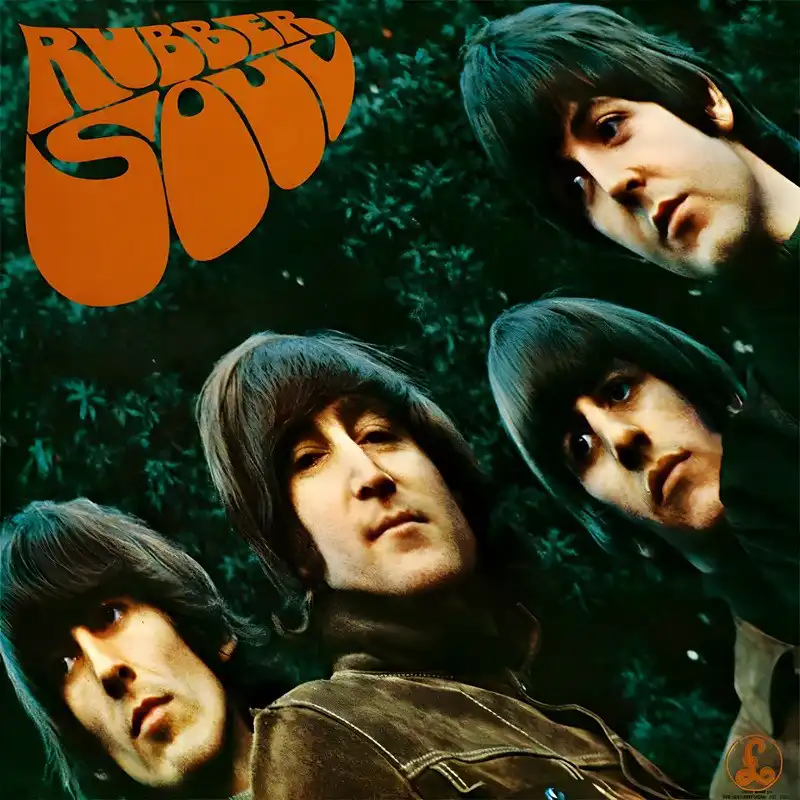
Disclaimer: This low-resolution album cover image is used under fair dealing for review, criticism, and identification. Copyright remains with the rights holder.
Recording The Rubber Soul Album
The band recorded most of Rubber Soul between 12 October and 11 November 1965, and they recorded “Wait” on 17 June 1965. However, the real shift was a new mindset, with studio-built arrangements, richer textures, and production shaping the music.
The obvious headline is George Harrison’s sitar on “Norwegian Wood (This Bird Has Flown)”, widening the band’s musical colours. Meanwhile, “In My Life” uses a piano recorded at half-speed, then played back at normal speed for a harpsichord sound. That creates the bright, nimble sound of the solo.
The Sounds
Rubber Soul is where The Beatles start breaking away from neat, disposable pop. The lyrics become more adult and specific, and the music leans into folk, soul, and tighter R&B-inspired grooves. The band absorbed what they heard in the US in 1965, including contemporary American radio.
Meanwhile, they also drew inspiration from the wider shift in songwriting around them.
That broader influence sits alongside their own increasing ambition: fewer obvious “formula” moments, more emphasis on feel, detail, and variety from track to track.
Rubber Soul (Album): Chart Success
In the UK, Rubber Soul hit number one and stayed there for eight weeks, and it ran for 42 weeks on the album chart in total. No tracks from Rubber Soul were issued as UK singles, continuing the approach used on With The Beatles and Beatles For Sale.
The double A-side single recorded during the same period, “We Can Work It Out” and “Day Tripper“, was released on the same day as the UK album and went to number one.
Take A Listen
Click play to hear the snippets, then share your thoughts on the Beatles Fan Club Forum.
Prefer not to accept optional cookies? Open this album on Spotify.
Sources And References
- The Beatles – Official Rubber Soul album overview, cover notes, and credits.
- Official Charts Company – Rubber Soul UK chart run and weeks at No. 1.
- The Beatles – Official Beatles albums chronology and release listing.
- Wikipedia – Recording dates, cover context, and release overview.
BeatlesFan.Club operates independently and does not affiliate with The Beatles, Apple Corps, or any official rights holders.
